
Future Car Market Overview New Car March 2024

Welcome to the latest version of our overview. Our aim is to bring you the best content and layout, making it easy to identify new and revised information. CLICK HERE to read the full article
Motorcycle Overview March 2024

As we move into the first months of a new year the Governor of the Bank of England said he was not overly concerned about a downturn, arguing that it was likely to be shallow and short-lived. This is after analysts expect official data to show the economy shrank by 0.1% for Q4 of 2023. It will be the second consecutive contraction, meaning the UK has fallen into a recession for the first time since the start of the pandemic. CLICK HERE to read the full article
Car Market Overview March 2024
This monthly overview provides an update on the current new and used car markets in the UK. We will report on new car registrations to the end of January 2024 and used car activity at the time of writing. All information is correct as of 26th February 2024. CLICK HERE to read the full article
Motorcycle Futures Overiew March 2024
Into the first months of the year and the Governor of the Bank of England said he was not overly concerned about a downturn, arguing that it was likely to be shallow and short-lived. Analysts expect official data to show the economy shrank by 0.1% for Q4 of 2023 and it will be the second consecutive contraction, meaning the UK has fallen into a recession for the first time since the start of the pandemic. CLICK HERE to read the full article
Is this the most overlooked reason that private buyers are turning away from electric cars?
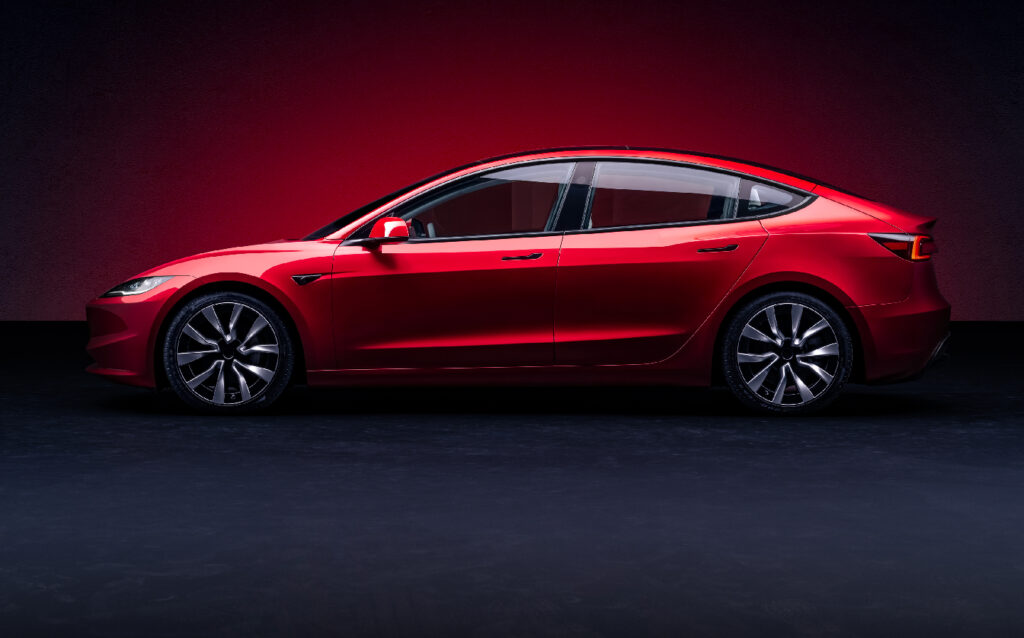
There are a number of reasons new EVs are falling out of favour with private car buyers, but one factor is often overlooked The reports of cooling demand for electric cars are greatly exaggerated; sales of new EVs actually increased 21 per cent in January, compared with the same month in 2023. But there is a kernel of truth because sales to private buyers last month fell by 25.1 per cent year-on-year. It was only because companies are snapping them up for their fleets (up 41.7 per cent) that there was a net gain. Companies get generous tax breaks to buy battery electric vehicles, and employees look at the ultra-low benefit-in-kind costs and realise it’s by far the cheapest way to get behind the wheel. -Advertisement-The Society of Motor Manufacturers and Traders (SMMT) is concerned about this, which it has identified as an “ongoing trend that will undermine Britain’s ability to deliver net zero”. In other words, unless it’s addressed the UK will find it harder to meet our environmental commitments. One cause of the issue the organisation and other experts have identified is high energy prices, which we’ve all felt since Russia invaded Ukraine. Adding to the problem, the SMMT says, is the fact that if you plug an electric car into a public charging point the government adds 20 per cent to the cost as VAT. Do the same at home and VAT is only charged at five per cent. This means rapid charging on motorways has become ridiculously expensive. One of my top-ups last year, on a trip to Scotland, cost me £51.12 (64.71kWh at 79p/kWh), of which £8.52 was VAT. I was driving a BMW i4 M50, which was averaging around 3.5 miles per kWh. That means that £51.12 added 226 miles of range. I can imagine diesel (and indeed petrol) car drivers choking on their coffee at this point, as an equivalent internal combustion engine (Ice) car would have got me across the border without having to stop, and for around the same cost. Cutting VAT would help… but only a little. It’s still true to say that charging at home makes EVs much cheaper than Ice cars per mile but if you have to use motorway chargers regularly, the cost of charging is a genuine concern. I have a friend who says he’s going to swap his pure-electric Genesis GV60, which he loves, to a hybrid for this very reason; because he spends a lot of time on motorways, the economics for him don’t add up. Other reasons cited for private buyers choosing not to buy new EVs include the removal of subsidies such as the plug-in car grant, which cut the retail price of new electric vehicles. There’s also the current high interest rates resulting in PCP finance deals that are now much more expensive than they were before Liz Truss’s “disastrous mini budget” (as it shall forevermore be remembered). Commentators also point out that by moving the cut-off date for sales of new petrol and diesel cars from 2030 to 2035, current Prime Minister Rishi Sunak was effectively telling motorists they can put off their EV purchase. But one often overlooked issue might be having an even bigger impact on private sales of new EVs: what’s going on in the used car market. SMMT figures released today show that, again, electric vehicle sales are growing. In fact used EV sales are up 90.9 per cent year-on-year. However, they still only represent 1.6 per cent of the total market. Buying a used car makes much more sense to me than buying new because of depreciation: the fall in value of a car over time. Most cars lose 50-60 per cent of their value over their first three years, and I just can’t stomach — or afford — that sort of money-torching. I’ve bought cars on PCP, yes, but only cars more than three years old. The problem for electric cars might be becoming even more exaggerated. In the recent past, EV residuals have been extremely strong because they were in high demand and short supply. But that’s changing as the surge of new electric cars that have entered the market in the last few years begin to enter the secondhand market.. “As stock levels have increased into the used car market, prices have gradually been pushed downwards,” said Richard Peberdy, UK head of automotive at consultancy firm KPMG. At the end of January, vehicle valuation experts Cap HPI put a value on that: as reported in Fleet News, “Battery electric vehicles (BEVs) and plug-in hybrids fell by 1.8 per cent at the three-year age point, equivalent to over £425, with BEVs dropping by 1.9 per cent (£720) at one-year-old.” That compared with a 0.1 per cent drop for petrol, diesel and hybrid cars. Peberdy identified that as good news for used car buyers but a problem for dealers. “While still higher than pre-pandemic, a lowering of prices is of course good news for many people looking for a vehicle. But the depreciation rates have been hard to take for some sellers, particularly those who bought certain EVs from new.” It’s also clearly going to be a problem for new car buyers. Why would you buy a new electric car when its value is likely to plummet even faster than a petrol equivalent? And there’s also the fear that, as with the latest laptop, TV or other tech item, it’ll be obsolete within a couple of years as more advanced versions are rolled out in rapid succession. Elon Musk isn’t helping things. His car company Tesla, which sells by far the most popular EV of 2023, the Model Y, has cut its new car prices without warning on several occasions to compete with a flood of new rivals from China. This has meant that some people who bought a Tesla last year woke up the following morning to find it was worth several thousand pounds less than they thought. That makes buying new
The second-hand cars soaring in value – and an EV tops the lot
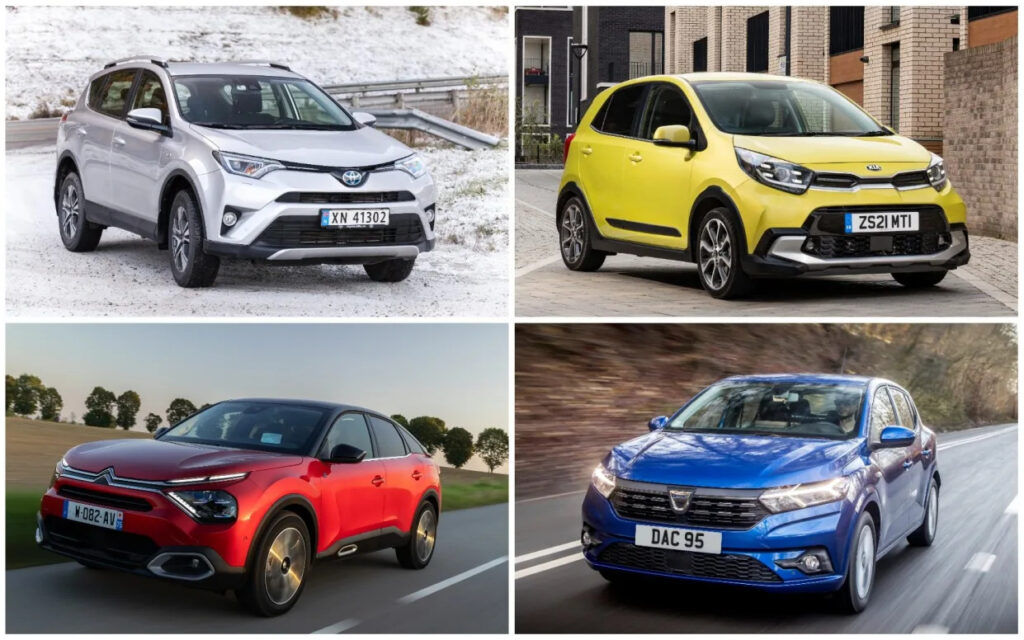
It has not been a pretty picture on car forecourts. Towards the end of 2023, used values started to slide dramatically, perhaps bursting the bubble caused by a lack of new car supply post-Covid pandemic – or, if not, at least deflating it somewhat. According to Cap HPI, which keeps tabs on used car values for dealers, used prices dropped 10.5 per cent in the last quarter of 2023. And while it’s true that values always tail off in the run-up to Christmas as buyers are preoccupied with the associated costs, seasonality was only part of the problem; values simply don’t normally fall by this much, even toward the end of the year. But while those figures reflect a market-wide trend, not all cars have dropped in value. Some have been driven up by customer demand even in this falling market. That’s evidenced by data released last week by Motorway, showing the 10 cars whose values rose the most in 2023, based on the trade prices being paid by dealers for used cars purchased via Motorway’s online auction platform. Commenting on the study, Alex Buttle, the co-founder of Motorway, said: “Despite the market at large seeing a decline in average used-car values at the end of 2023, a number of cars bucked the trend and maintained their values, with some even increasing year on year. “Our data looked at the average sold price on Motorway, for makes and models under five years old, from 2022 to 2023. Interestingly, from the data we can see that compact city cars dominated the top 10, as drivers looked to save on running costs, adopting cost-efficient petrol, diesel, hybrid or electric models.” It’s worth noting that retail prices paid by buyers will differ from the trade prices quoted in the study. But given that dealers only tend to buy models they know will sell well, the figures still give us a very strong indication of which cars are in demand on the used market. If you own one of these, in other words, the good news is that dealers are keen to buy your car, meaning it could even be worth slightly more now than it was a year ago. If you’re planning to sell it or trade it in, now might be a good time. The top 10 cars which went up in value in 2023 10. Toyota RAV4 Average price in 2023: £28,188.50 Average price in 2022: £23,588.70 Price increase, year-on-year: 19.5 per cent It should come as no surprise that the RAV4 is in demand. It combines Toyota’s stellar reputation for reliability – which has only been boosted by the addition of a great warranty offer – with a practical SUV body, a de rigueur hybrid powertrain and four-wheel drive. For many used car buyers, in other words, it ticks all the boxes. 9. Honda Jazz Average price in 2023: £12,623.50 Average price in 2022: £10,304.90 Price increase, year-on-year: 22.5 per cent The Jazz may have fallen out of favour with some insurers thanks to a spate of catalytic converter thefts – but most used car buyers either don’t know yet or don’t care, as the Jazz is still one of the most sought-after secondhand buys. And the Jazz’s uniquely practical interior, excellent reliability record and easy-going demeanour mean it’s a perennial favourite. 8. Dacia Duster Average price in 2023: £11,161.00 Average price in 2022: £9,111.02 Price increase, year-on-year: 22.5 per cent Given the trend for SUVs and these straitened times, it should come as no great surprise that an SUV that’s low on cost and high on space, yet stylish and decent to drive, is proving so popular as a used buy. The Duster is a cracking little car that offers much of what its SUV competitors do, yet at a much more reasonable price. No wonder it’s in demand. 7. Kia Picanto Average price in 2023: £9,426.50 Average price in 2022: £7,632.79 Price increase, year-on-year: 23.5 per cent The Picanto is now the cheapest brand new car in the UK and second-hand it’s just as affordable. Nearly-new examples also benefit from Kia’s long warranty, which means even three-year-old cars have four years’ warranty remaining where their rivals’ have just run out. Throw in delightful driving dynamics and a smart, spacious interior and the little Kia comes with a big list of reasons buyers are keen on it. 6. Citroën C4 Average price in 2023: £11,194.00 Average price in 2022: £8,991.16 Price increase, year-on-year: 24.5 per cent Given Citroëns aren’t often known for holding their values brilliantly, it’s a bit of a surprise that this latest generation of C4 is in such demand. It could be that buyers are tempted by the blend of comfort and space, or it could be that the arrival of the costlier electric model to the market in greater numbers has dragged up prices. Either way, the C4’s values have rocketed since last year. 5. Vauxhall Corsa Average price in 2023: £8,305.00 Average price in 2022: £6,617.53 Price increase, year-on-year: 25.5 per cent It should come as no surprise that one of the UK’s best-selling cars features here – all the more so given the paucity of supply of its main rival, the Ford Fiesta, formerly a used bestseller. With Fiesta production ending in July 2023, the used market is crying out for small, affordable hatchbacks with low running costs and good dealer networks to replace it – and the sharply styled Corsa is the obvious alternative. 4. Hyundai i10 Average price in 2023: £8,261.00 Average price in 2022: £6,530.43 Price increase, year-on-year: 26.5 per cent The i10 is closely related to the Kia Picanto and is popular for very similar reasons: good value, lots of space for its size, low running costs, an interior that feels plusher than you’d expect and impressive reliability. The i10’s relatively newer design has meant it’s proven more popular than the Picanto with used buyers – despite the fact it doesn’t have quite such a long warranty. 3. Toyota Aygo Average price in 2023: £8,849.00
Commercial Overview February 2024

The latest figures from the SMMT reveal that new LCV registrations were up by 8.3% in December compared to November. That’s an increase of 2,268 registrations month on month, despite the interruption of the Christmas holidays. CLICK HERE to read the full article
Future Light Commercial Vehicle Overview – Used Commercials February 2024

This is the cap guide to future residual values for used light commercial vehicles. Individual forecasts are provided inpounds for periods from twelve months to four years. CLICK HERE to read the full article
Future Light Commercial Vehicle Overview – New Commercials February 2024
This is the cap guide to future residual values for light commercial vehicles. Individual forecasts are provided inpounds and percentage of list price for periods of twelve to sixty months with mileage calculations up to 200,000. CLICK HERE to read the full article
Future Heavy Commercial Vehicle Overview – Used Commercials February 2024
This is the cap guide to future residual values for used heavy commercial vehicles. Individual forecasts are provided in pounds for periods of twelve months to seven years. CLICK HERE to read the full article