Future Car Market Overview – New Cars October 2024

Welcome to the latest version of our overview. Our aim is to bring you the best content and layout, making it easy to identify new and revised information. As always, any customer feedback would be appreciated: e-mail [email protected] The content is structured as follows: Forecast Changes Market Conditions Historic Forecast Accuracy Forecast Methodology & Products Sector Reforecast Schedule 2024/5 CLICK HERE to read the full article.
Future Car Market Overview – SMR October 2024

Welcome to our latest overview of Service Maintenance and Repair (SMR) Budgets, previously known as the ‘gold book SMR editorial’. This is aimed at our Fleet sector customers, who may use the Budgets when setting their lease rates. Any customer suggestions for improvement would be appreciated: please e-mail [email protected] ollowing our acquisition of Derwent Management Services in 2014, cap-hpi Ludlow (Derwent) data has been used to populate our SMR budget forecast product since October 2014, but there have been no technical changes to any of our data files or services. CLICK HERE to read the full article.
Future Car Market Overview – Used Cars October 2024

Welcome to the latest version of our overview. Our aim is to bring you the best content and layout, making it easy to identify new and revised information. As always, any customer feedback would be appreciated: e-mail [email protected] The content is structured as follows: Forecast Changes Market Conditions Historic Forecast Accuracy Forecast Methodology & Products Sector Reforecast Schedule 2024/25 CLICK HERE to read the full article.
Car Market Overview – October 2024

This monthly overview provides an update on the current new and used car markets in the UK. We will report on new car registrations to the end of August 2024 and used car activity at the time of writing. All information is correct as of 24th September 2024. CLICK HERE to read the full article.
EVs written off FAR less frequently than petrol and diesel cars

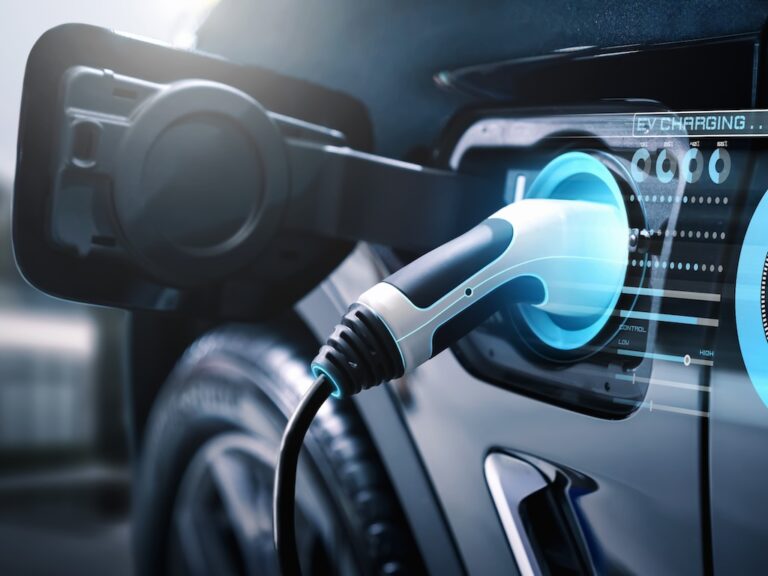
It says combustion engine cars are written off at over double the rate of EVs Despite various reports stating the contrary, a new study has found that EVs are being written off in Britain less frequently than petrols and diesels. Internal combustion engined (ICE) cars are written off at over double the rate of fully electric vehicles, automative data experts Cap HPI says. The study, which examines data from 2015 to August 2024, found 0.9 per cent of EVs under five years old have been written off, compared to 1.89 per cent of petrol and diesel vehicles. A similar gap remains at one year old models, where the percentage falls to 0.2 per cent for EVs and 0.4 per cent for ICE. The report is the latest good news piece surrounding EVs, following claims earlier this week that batteries in the latest electric models now last for 20 years or longer – and generally have a longer lifespan than components in conventional engines. on Clay, identification director at Cap HPI, said: ‘The study challenges one of the many misconceptions about electric vehicles. ‘The data clearly shows that EVs are written off at half the rate of petrol and diesel vehicles. ‘We work hard to provide an accurate picture of the automotive sector to the industry and consumers alike, from valuation data to provenance checks and trend analysis. ‘The motor industry has to collectively address the wave of misinformation around EVs that is present online to enable consumers and fleet customers to make informed and well-balanced decisions about their next vehicle.’ The analysis reveals there are currently 1.25million EVs under five years old on Britain’s roads. Of these, 355,000 are less than 12 months old. According to the latest official car registration figures published by the Society of Motor Manufacturers and Traders, BEV registrations increased 10.8 per cent in August compared to the same time last year and accounted for 22.6 per cent of all new vehicles – the highest market share seen since December 2022. Cap Hpi’s data goes against a number of reports in the last year or so that have made bold claims that EV write offs are far more common. A Reuters report last year warned of a rise in the number of electric vehicles being written off due to minor damage to their battery packs. Pictured: Damaged electric and hybrid cars at UK salvage company Synetiq’s yard in Doncaster https://youtu.be/rY3HJVTyRqA An investigation by Reuters in March 2023 suggested insurance companies are increasingly being left with little to no choice but to permanently take electric cars off the road after minor collisions, which in turn is pushing premiums higher. The report warned of scratched and mildly damaged battery packs ‘piling up in scrapyards in some countries’ with experts saying batteries in expensive Tesla Y SUVs have ‘zero reparability’ because they are a structural part of the car. Further research last year compiled by UK-based automotive risk intelligence company Thatcham Research also warned that EVs are more expensive to repair, take longer to fix and are more commonly written off as a result of damage to their batteries. Its Impact of BEV [Battery Electric Vehicle] Adoption on the Repair and Insurance Sectors report published last July – funded by Innovate UK, the government’s innovation agency – says that road collisions involving an electric car are often ‘catastrophic for the vehicle’. This chart shows the electric vehicle and high voltage battery repairs as a proportion of total repairs Thatcham Research showed the impact of a low severity impact on a Tesla and the damage it can cause to the battery casing, which would then need to be repaired or replaced The casing – in which the batteries are stored – often have a wide structure, making them vulnerable particularly to side-on collisions This is because of a ‘concerning lack of affordable or available repair solutions and post-accident diagnostics’, which often sees EVs written off as uneconomical to be returned to the road. This is most commonly the case if the high-voltage battery pack has sustained damage as a result of a collision. Batteries in electric cars represent a substantial percentage of the original vehicle value and if harmed in anyway often sees insurers deem the cost to repair or replace them exceed the car’s total existing value. The study said the cost of replacement EV batteries varied widely depending on the model – though it is extremely expensive process no matter the car in question. For a premium electric car, for instance, the cost of a new battery is around £29,500, Thatcham Research said. This is more than the price of a new petrol Volkswagen T-Roc SUV. And for ‘budget-friendly’ electric models, it estimates the average cost of battery replacement to be £14,200 – that’s more than a Dacia Sandero, Britain’s cheapest car. Earlier this year, This is Money reported on the difficulties some owners of Chinese EVs were having trying to insure their vehicles. This was due to a lack of available parts and expertise to repair them, which in turn was seeing vehicles being written off for relatively low levels of crash damage. Drivers of BYD and GWM Ora models explained how they were facing extremely steep quotes for cover because only a few insurance providers will underwrite them due to the difficultly to fix them. The government has recognised the need to address misinformation around EVs. Last year, Richard Bruce, director of transport decarbonisation at the Department for Transport, said: ‘I do think there has been an impact from a concerted campaign of misinformation over the last 14 months or so that has been pushing consistent myths about EVs that people absorb and which is reflected in their appetite [for purchasing EVs]. ‘There is an anti-EV story in the papers almost every day. ‘Sometimes there are many stories, almost all of which are based on misconceptions and mistruths, unfortunately.’ *Article published: https://www.dailymail.co.uk/money/electriccars/article-13868267/EVs-written-FAR-frequently-petrol-diesel-cars.html?ico=mol_desktop_moneycars – image(s) extracted from article
NASCAR Appeals Panel Sides with Chase Briscoe, Joe Gibbs Racing, Overturns Major Penalty

The National Motorsports Appeals Panel has cleared Joe Gibbs Racing of any wrong doing in regard to a penalty NASCAR assessed Chase Briscoe’s team following the season opening Daytona 500. The penalty dealt with the vehicle assembly rules and the Toyota’s spoiler. NASCAR gave a four-race suspension to crew chief James Small, a $100,000 fine to Gibbs and a loss of 100 championship points and 10 playoff points to Gibbs and Briscoe. That left Briscoe, who won the pole for the Daytona 500, 45th in the driver standings after the prestigious race. However, on Wednesday, the Appeals Panel determined that after hearing testimony, JGR, Small and Briscoe didn’t violate the rules set forth in the penalty. “Biggest points day of my career!” Briscoe posted on X (formerly Twitter). “We’re back! “In all seriousness, thank you to NASCAR for giving us the option to show our evidence and huge thank you to everyone at Joe Gibbs Racing, who put in countless hours to put everything together. “A lot of people keep saying I’m lucky to be where I am … Just wanted to clarify that I’m not lucky, I’m blessed.” In reaching its decision, the three-person panel said it believed the elongation of some of the holes on the number 19 Cup car spoiler was caused by the process of attaching that specific spoiler base to the rear deck and not modification of the single source part. The panel was comprised of Dixon Johnston, Hunter Nickell and Cathy Rice. *Article published: https://autos.yahoo.com/never-better-time-buy-used-112232056.html – image(s) extracted from article
Strong wholesale demand supports used car values in August: cap hpi

UK used car values in August remained resilient, with the average value movement at the three-year age point declining by just 0.6%, according to cap hpi, an automotive data company owned by US-based auto software company Solera. This decline is slightly below the seasonal norm for August, which typically sees a 0.7% decrease. The used car market has demonstrated robust performance over the past four months, with values dropping by an average of 0.5% per month and 2% in total. This compares favourably to 2018, dubbed ‘the year of the used car,’ when values fell by 3% over the summer period. Battery Electric Vehicles (BEVs) continue to gain traction among retailers, reflected in improved auction conversion rates. BEVs currently average 1.3 sales attempts before being sold, compared to 1.5 attempts for petrol vehicles. Derren Martin, director of valuations at cap hpi, noted that the price reductions in the final quarter of last year helped stabilise used car values, which had been rising since 2021. He added that while certain models and fuel types have seen value declines due to supply-demand imbalances, overall used car prices have remained stable throughout the year. Retailers continue to face challenges in sourcing vehicles that meet their preferred criteria, particularly as inventory levels remain low due to increased stocking costs. This limited supply, combined with steady demand, has contributed to maintaining price stability. At the one-year age point, used car values also declined by an average of 0.6% (around £250), while older vehicles saw larger percentage drops, with 10-year-old models declining by 2.1% on average (approximately £85). Among vehicle types, MPVs saw the largest decline, with values dropping by an average of 1.3%. However, this decrease aligns with historical trends for this time of year. Meanwhile, the main volume sectors — lower medium (C-Sector), supermini, and SUV — experienced declines of around 0.5%, underscoring the market’s overall stability. Pure hybrids performed the best among fuel types, with values falling by just 0.2% on average, highlighting continued demand for vehicles that bridge the gap between traditional and fully electric powertrains. Petrol cars saw a 0.6% decline, while EVs and plug-in hybrids both experienced average drops of around 1.0%. Although BEVs have seen monthly value declines for the past two years, the rate of decline has slowed, and some models, such as the Audi Q4 E-Tron Sportback and Tesla Model S, have even seen value increases at the three-year age point. Looking ahead, Martin expressed cautious optimism for the final quarter of 2024. He noted that while last year’s significant value drops are unlikely to repeat, the market remains sensitive to potential disruptions, including the impact of manufacturers reducing sales of internal combustion engine vehicles to meet zero-emission vehicle mandates. Responsible remarketing practices will be essential to ensuring continued market stability. “Strong wholesale demand supports used car values in August: cap hpi” was originally created and published by Motor Finance Online, a GlobalData owned brand. *Article published: https://finance.yahoo.com/news/strong-wholesale-demand-supports-used-103520412.html – image(s) extracted from article
What Are The Top 10 Best Used EVs Under £12,000 In The UK?

It’s no secret that electric vehicles tend to be a tad more expensive to buy new compared to their equivalent ICE counterparts. The same is true here in the UK, like it is everywhere else, given that EVs are a pretty young concept, so it’ll take time for all the trickle-down economics and the economies of scale to make electric cars truly reach cost-parity with ICE vehicles. So, does this mean that you should avoid buying electric cars now and wait? No, especially not if you know where to look, as the famed automotive data company, cap hpi, wants to showcase. With extensive experience and a vast database of automotive valuation data and knowledge about market dynamics and pricing, they’re the sort of people you could trust to put a dollar figure on your car. Based on cap hpi’s research and analytics, over the past 12 months alone, they found that the average drop in market value for electric vehicles – with mileage around 30,000 miles and three years old – is around £5,000, or 19%. They claim that this is primarily due to market realignment, so it’s not expected to repeat, but it’s interesting, nonetheless. Can You Beat The Electric Car Market? Regardless, with all that data on hand, cap hpi was able to put a list of what they think – and I’m definitely inclined to agree with a lot of these – are the top 10 best used EVs that you can get, with a trade value under or around £12,000. With over 1 million electric vehicles driving around on UK roads today, whittling all that variety down to just 10 isn’t easy, but if you’re in the market for an EV, it might be worth considering cap hpi’s selection, instead. Besides, we know for a fact that EVs often depreciate very heavily once they leave the dealership lot. Therefore, if you want the best bang for your buck, it’s way easier on your pocket to instead opt for a used EV. This is why cap hpi focused on three-year-old electric vehicles (with 30,000 miles on the clock), which is what they’ve found is the sweet spot for used EVs – they’re old enough, but not too old. On top of that, cap hpi further found that used EVs also generally have lower costs of ownership compared to buying one brand-new. Here’s what Chris Plumb, a senior valuations editor at cap hpi, has to say about this: “Used EVs offer a marked saving over new vehicles with low costs of ownership. For the average motorist, there is a used EV to suit most consumer’s daily needs with the added benefit of offering lower carbon emissions.” The Top 10 Best Used EVs To Choose From The folks over at cap hpi have more to say based on their findings, too. They’ve found that it’s indeed proven that electric cars are cheaper to operate than their ICE counterparts. They have fewer moving parts, which aids in lowering maintenance and repair costs. Moreover, if you plan it out right and charge your electric car at home – either through solar power or by using off-peak electricity rates, like charging late at night and in the early morning hours – EVs are cheaper to recharge through the mains than filling your car up with diesel or petrol. So, with that in mind, here are cap hpi’s top 10 best used EVs under £12,000 in the UK today (with the respective model years in parentheses): Make & Model Trade Price SKODA CITIGO (MY19-21) Electric £10,080 HYUNDAI IONIQ (MY19-23) Electric £10,050 FIAT 500 (MY20- ) Electric £9,960 MG MOTOR UK MG 5 (MY20- ) Electric £9,910 KIA SOUL (MY14-19) Electric £9,425 NISSAN LEAF (MY17- ) £9,190 VOLKSWAGEN UP (MY13-24) Electric £8,950 VAUXHALL CORSA (MY19- ) Electric £8,700 RENAULT ZOE (MY19-24) Electric £8,465 SMART FORFOUR (MY20- ) Electric £7,295 *Article published: https://www.motorverso.com/top-10-best-used-evs-under-12000-in-the-uk/ – image(s) extracted from article
Commercial Overview – September 2024

July New LCV Registrations down but the market remains in good shape In July, 24,689 new LCVs were registered in the UK according to the latest figures from the SMMT. That’s a decrease of 25.3% (8,377) compared to June. CLICK HERE to read the full article.
Future Light Commercial Vehicle Overview – Used Commercials September 2024

This is the cap guide to future residual values for used light commercial vehicles. Individual forecasts are provided in pounds for periods from twelve months to four years. CLICK HERE to read the full article.