
Used electric cars are selling FASTER than petrol and diesel models – for one very good reason
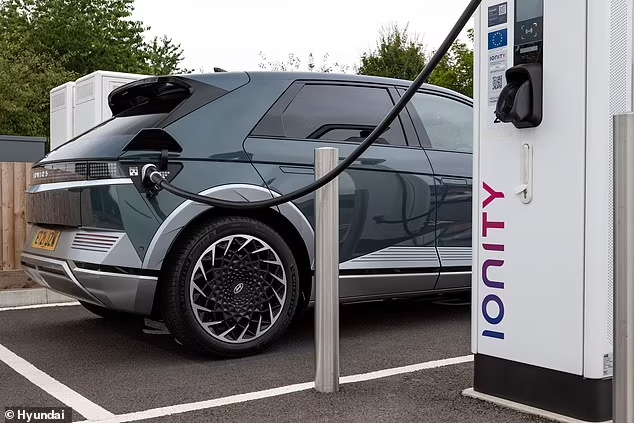
Motorists are snapping up used electric vehicles faster than any other type of car as rock-bottom second-hand prices make them more appealing than petrol and diesel alternatives. In the month of November, dealers were, on average, selling an EV in just 33 days of adding them to their forecourts, according to a new market report. The average across all fuel types is 40 days, with diesels taking the longest of all – a total of 42 days, says cap hpi. It said the biggest reason for EVs to be flying off forecourts was the increase in numbers available within the ‘desirable retail price point of under £18,000’. Cap hpi, which is fed data from used vehicle retailers across the UK, said these low prices have made them more attractive to consumers as they offer ‘exceptional value for money’. The report is a major contrast to the new car sector, which has seen a public demand for EVs remain relatively low and sales of 100 per cent battery vehicles driven primarily by fleets and motorists taking advantage of tax-cutting salary sacrifice schemes. Used EVs not only sold faster than second-hand petrol and diesel cars in November, they also outperformed hybrids. Plug-in hybrids were the second slowest to sell at 41 days while conventional self-charging hybrids took 37 days on average, according to cap hpi’s latest data. Petrol cars averaged 39 days at used retailers before a buyer was found. Electric models aged three to five years old ‘demonstrated particularly strong sales’, the valuations experts said. EVs of this age were sold on average within 25.5 days – well below the 36 days recorded for petrol vehicles in the same age group – as many had fallen below the £18,000 ceiling, which is where second-hand sales dominate. Commenting on the data, Chris Plumb, head of current car valuation at cap hpi, said: ‘As the used car market for battery electric vehicles continues to mature, it is encouraging to see that many of the key performance indicators for this fuel type, especially in the important retail age band of three to five years, are positive. ‘As we have highlighted, EVs within this age band now represent exceptional value for money. ‘When factoring in the total cost of ownership savings and the remaining battery warranty, they present a compelling offer to used car buyers.’ Auto Trader, the nation’s biggest online vehicle marketplace, shared a similar update on November activity. Based on around 800,000 used motors advertised for sale on its website daily last month, it said the average listed price of a used petrol car last month was 4.7 per cent lower than November 2023 at £14,710. Diesels were down 5.8 per cent at £14,077 on average while the typical plug-in hybrid lost 10.5 per cent year-on-year at £30,598. But the biggest decline was the average advertised price of pre-owned EVs, down 11.7 per cent year-on-year to £26,390. Cheaper pricing resulted in faster sales; cars had sold two days quicker on average than in 2023, taking 31 days to leave forecourts. However, EVs sold even more quickly in only 28 days. It also said older models – those between three and five years old – were finding new owners in a mere 22 days. In the month of November, dealers were, on average, selling an EV in just 33 days of adding them to their forecourts, according to cap hpi The average across all fuel types is 40 days, with diesels taking the longest of all – a total of 42 days Feedback from cap hpi’s retail partners highlighted that the used car retail market showed resilience throughout November. The majority of dealers described trading conditions as steady. However, some reported unseasonably strong demand. Overall, most retailers appear pragmatic, acknowledging the influence of seasonal factors and the time of year on performance. Retail prices have seen minimal reductions this month, with adjustments mainly limited to ageing stock. Most retailers have avoided overstocking, reducing the urgency to cut prices compared to previous years, cap hpi said. *Article published: https://www.dailymail.co.uk/money/electriccars/article-14157027/Used-electric-cars-selling-FASTER-petrol-diesel-models-one-good-reason.html – image(s) extracted from article
NEXUS Automotive International to offer Solera’s dynamic routing solution to all members.

NEXUS Automotive International partners with Solera to support the roll-out of the Roadnet Anywhere solution to enable members to optimise costs and resources in last-mile logistics operations. Solera, the global leader in vehicle lifecycle management, today announces a new strategic partnership with NEXUS Automotive International. The new global partnership will give NEXUS members access to Solera’s cutting-edge Roadnet Anywhere dynamic routing solution, designed to optimise operations, reduce costs, and lower carbon emissions. Roadnet Anywhere leverages advanced algorithms and data analytics to optimise fleet operations, empowering users to reduce fuel consumption, improve delivery accuracy and minimise carbon footprints. The solution enhances customer service by enabling real-time tracking and proactive communication, improving the logistics experience. Commenting on the move, Gael Escribe, CEO of NEXUS Automotive International, said: “The collaboration with Solera is a major step forward in our commitment to providing our global community with the most advanced solutions of our industry. By teaming up with Solera, we are equipping N! members with the tools to thrive in a competitive market while contributing to a more sustainable automotive aftermarket industry.” The partnership is a significant milestone in empowering the global automotive aftermarket community with innovative technologies to achieve sustainability and improved operational efficiency. NEXUS and Solera share a vision of advancing technology adoption in the automotive aftermarket industry. Together, they aim to guide and engage NEXUS members on the transformative impact of dynamic routing. Arnaud Agostini, International Managing Director Sales, added: “This partnership with NEXUS Automotive International represents a powerful alignment of vision and innovation. With increasing complexity and cost pressures on supply chains globally, Roadnet Anywhere, is empowering NEXUS members to enhance efficiency, reduce costs, and drive meaningful sustainability impacts, such as lower fuel consumption and carbon emissions. As a global leader in fleet technology, operating in 107 countries with over 2,000 customers generating 24 million routes annually, Solera is proud to bring proven expertise to help shape the future of the automotive aftermarket industry “. About Solera Solera is the global leader in vehicle lifecycle management software-as-a-service, data, and services. Through four lines of business – vehicle claims, vehicle repairs, vehicle solutions, and fleet solutions – Solera is home to many leading brands in the vehicle lifecycle ecosystem, including Identifix, Audatex, DealerSocket, Omnitracs, LoJack, Spireon, eDriving/Mentor, Explore, cap hpi, Autodata, and others. Solera empowers its customers to succeed in the digital age by providing them with a “one-stop shop” solution that streamlines operations, offers data-driven analytics, and enhances customer engagement, which Solera believes helps customers drive sales, promote customer retention, and improve profit margins. Solera serves over 280,000 global customers and partners in 120+ countries. For more information, visit www.solera.com. About NEXUS Automotive International Established in 2014 by CEO Gaël Escribe, NEXUS Automotive International, the automotive aftermarket (AA) company, is shaping the future of the AA. Thanks to an entrepreneurial, innovative and agile mindset, disrupts the industry bringing innovative solutions for a more sustainable, digital and connected mobility. At the same time, it supports its community of more than 498 members in 138 countries, allied with 76 global suppliers, by providing services to accelerate their growth. is offering new approaches and new ideas for a connected, global and consolidated world of tomorrow to accelerate the success of car and heavy-duty spare parts and services distributors and manufacturers, through 16 regional structures that connect them. NEXUS’ consolidated turnover is expected to reach more than 46 billion euros in 2024. *Article published: https://businessinthenews.co.uk/2024/12/05/nexus-automotive-international-to-offer-soleras-dynamic-routing-solution-to-all-members – image(s) extracted from article
Cap HPI speeds up fraud detection with enhanced clocking investigation tool

Cap HPI has re-engineered its National Mileage Register (NMR) investigation process to offer a faster and more efficient service for dealerships to help protect car buyers from mileage tampering, or “clocking”. Cap HPI’s enhanced service now integrates 500 million records from more than 20 industry sources including the DVLA, insurance claims, V5 documents, and leasing companies to provide a comprehensive defence against fraudulent activity The service, part of the HPI Check, can help identify and address potential mileage tampering in vehicles, helping dealers comply with legal obligations and protect buyers. John Dennis, UK sales director at Cap HPI, said: “The new approach is faster and more reliable than the previous process. It also gives users clearer data, helping them evaluate and manage risk. By saving dealers time and money through increased efficiency, we’ve created a service that supports both compliance and operational goals.” The re-engineered NMR service compares a vehicle’s current mileage against the National Mileage Register database to verify accuracy. Developed in partnership with Trading Standards, the process ensures recorded mileage reflects the true distance travelled based on available data. Trading Standards advises dealers to supplement the NMR check with additional diligence, such as obtaining a signed mileage declaration from the current owner; conducting a physical inspection of the vehicle to confirm its condition aligns with the recorded mileage and reviewing the vehicle’s MOT and service history. *Article published: https://www.am-online.com/news/cap-hpi-speeds-up-mileage-fraud-detection-with-enhanced-clocking-tool – image(s) extracted from article
Best Value Used SUVs and 4x4s Under £11,000: CAP HPI’s Top Picks

When searching for an affordable yet reliable SUV or 4×4, many drivers opt for used models that provide strong performance without straining their budget. CAP HPI, the leading experts in automotive data and valuations, have identified the best used vehicles under £11,000 that offer exceptional value and performance. Top Used SUVs and 4x4s Under £11,000 CAP HPI’s research focused on 3-year-old vehicles with approximately 60,000 miles. Based on this, here are the top value SUVs and 4x4s: Dacia Duster 1.5 Blue dCi Comfort 5dr 4×4 – £9,925 Known for its affordability and reliable 4×4 capabilities, the Dacia Duster stands out as the top value pick under £10,000. Suzuki Ignis 1.2 Dualjet Hybrid SZ5 ALLGRIP 5dr – £10,250A compact and fuel-efficient hybrid with Suzuki’s ALLGRIP system, perfect for handling a variety of road conditions while offering impressive economy. Dacia Duster 1.3 TCe 150 Prestige 5dr 4×4 – £10,550A more powerful option from Dacia, offering excellent performance, all-wheel drive, and great value for money. Subaru XV 1.6i SE 5dr Lineartronic – £10,850A reliable all-wheel-drive model, the Subaru XV is a great all-rounder for those looking for both comfort and capability. Ssangyong Korando 1.6 D Pioneer 4×4 5dr Auto – £10,950This spacious 4×4 delivers solid diesel performance, making it ideal for families or adventurous drivers looking for a practical vehicle. Best Value by Price Reductions CAP HPI also highlights models with significant year-on-year price drops, offering excellent deals for buyers: Audi E-Tron Sportback 300kW 55 Quattro – 24.9% dropThe only EV on this list, this model offers substantial savings for eco-conscious buyers seeking a luxury electric SUV. Ssangyong Korando 1.6 D Pioneer – 22.3% dropA reliable 4×4 at a reduced price, this model is perfect for those looking for a capable and affordable SUV. Land Rover Range Rover Velar 2.0 P400e – 22.2% dropA luxury hybrid SUV, now more affordable due to its significant price reduction, making it an attractive option for those seeking performance and luxury. Maserati Levante Hybrid GT – 21.9% dropA high-performance luxury SUV with substantial savings, this model offers both prestige and value. Subaru XV 1.6i SE Premium – 21.8% dropKnown for its reliability and versatility, the Subaru XV provides great value for those seeking a dependable SUV. CAP HPI’s Expert Insight Chris Plumb, Senior Valuations Editor at CAP HPI, shares his thoughts: “The SUV market continues to thrive, and there are some fantastic deals to be had on 3-year-old models priced under £11,000. The Dacia Duster, in particular, is an exceptional choice for buyers looking for value, practicality, and a reliable 4×4.” Protect Your Purchase with a CAP HPI Check Before purchasing any used vehicle, it’s essential to conduct a CAP HPI Check. This helps ensure you’re not buying a car with hidden issues, such as outstanding finance, previous accident damage, or a history of being written off. An HPI Check is a simple way to protect yourself from potential scams and ensures you’re making an informed purchase. Conclusion If you’re in the market for an affordable, reliable SUV or 4×4 under £11,000, models like the Dacia Duster, Subaru XV, and Ssangyong Korando offer exceptional value. Remember to use a CAP HPI Check to ensure a safe and secure purchase, and you can drive away with confidence, knowing your new vehicle has a solid history behind it.
Future Light Commercial Vehicle Overview – Used Commercials December 2024

This is the cap guide to future residual values for used light commercial vehicles. Individual forecasts are provided in pounds for periods from twelve months to four years. CLICK HERE to read the full article.
Future Light Commercial Vehicle Overview – New Commercials December 2024
This is the cap guide to future residual values for light commercial vehicles. Individual forecasts are provided in pounds and percentage of list price for periods of twelve to sixty months with mileage calculations up to 200,000. CLICK HERE to read the full article.
Car Market Overview – December 2024

This monthly overview provides an update on the current new and used car markets in the UK. We will report on new car registrations to the end of October 2024 and used car activity at the time of writing. All information is correct as of 25th November 2024. CLICK HERE to read the full article.
Future Car Market Overview – Used Cars December 2024
Welcome to the latest version of our overview. Our aim is to bring you the best content and layout, making it easy to identify new and revised information. As always, any customer feedback would be appreciated: e-mail [email protected] CLICK HERE to read the full article.
Future Car Market Overview – SMR December 2024
Welcome to our latest overview of Service Maintenance and Repair (SMR) Budgets, previously known as the ‘gold book SMR editorial’. This is aimed at our Fleet sector customers, who may use the Budgets when setting their lease rates. CLICK HERE to read the full article.
Future Car Market Overview – New Cars December 2024
Welcome to the latest version of our overview. Our aim is to bring you the best content and layout, making it easy to identify new and revised information. As always, any customer feedback would be appreciated: e-mail [email protected] CLICK HERE to read the full article.